Key Takeaway
Professional services firms, chartered accountancy practices, law firms, consultancies, architecture and engineering practices, and agencies, run almost entirely on the work AI compresses best: reading documents, drafting documents, and applying accumulated expertise to client situations. The firms that win the transition will use the compression to deepen judgment and advisory value, not to hollow out the training ground their future partners learn on. The adoption playbook is the same one manufacturing is learning: audit the work first, tools second, proof always.
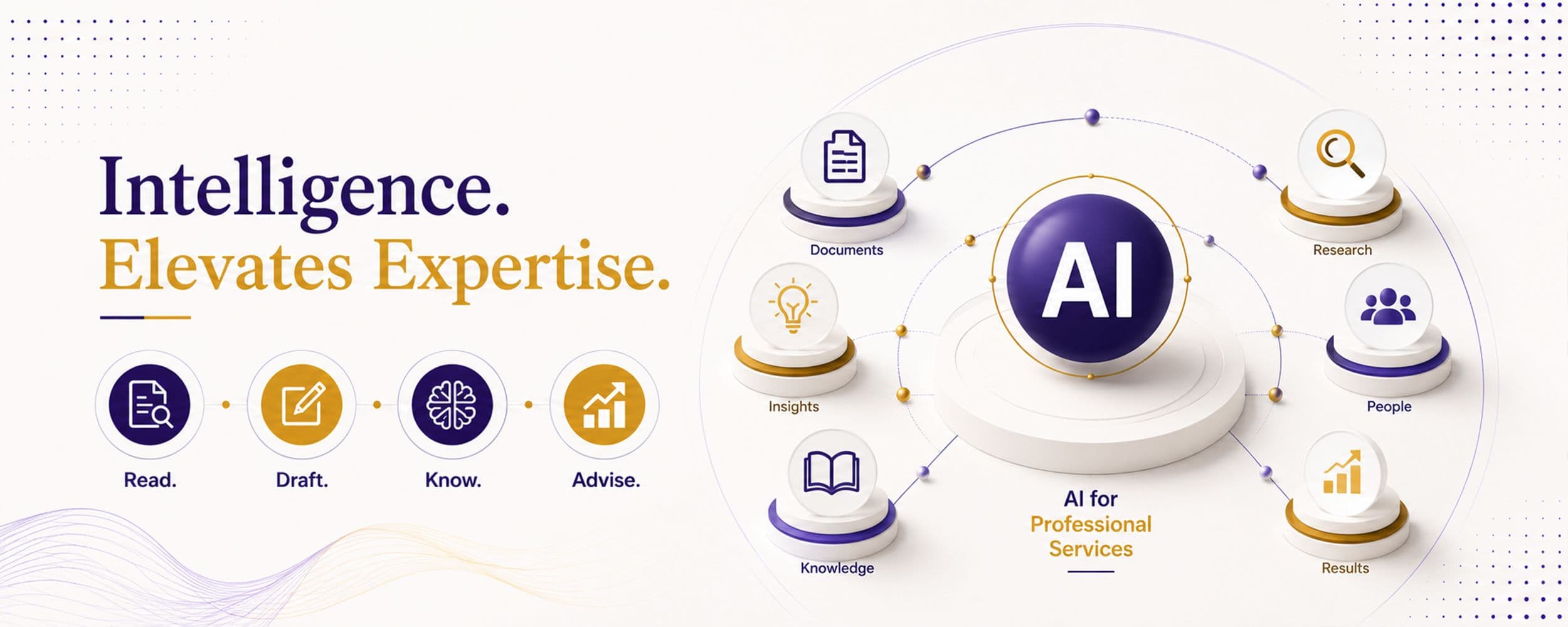
Ask a partner in a mid-sized professional services firm what their people actually do all day, and the honest inventory is striking: they read documents, they produce documents, and they apply the firm's accumulated expertise to the situation in front of them. Compliance filings, contracts, due diligence, audit working papers, drawings and reports, proposals and deliverables.
Now notice what the current generation of AI is unambiguously best at: reading documents, drafting documents, and retrieving relevant precedent from a body of accumulated knowledge. The overlap is not partial. It is nearly total, and that is why professional services is not a future AI market. It is the next wave, arriving now.
Why this wave, and why now
The work matches the technology. In our manufacturing ROI article we described the pattern that predicts AI payback: high-volume judgment work on information, performed by scarce people. Manufacturing has that pattern in its offices, around the shop floor. Professional services firms are that pattern, wall to wall.
The economics are being questioned from the client side. Sophisticated clients increasingly know what AI can do, because they are adopting it themselves. When a first-draft contract, a routine filing, or a standard research memo is visibly compressible from days to hours, clients begin asking why it still bills like days. Firms that adopt early get to redesign their pricing on their own terms; firms that resist will have it redesigned for them by the first serious competitor who moves.
The leverage model is cracking anyway. The classic pyramid, many juniors doing volume work under few seniors, already strains against hiring costs and attrition. AI does not merely pressure that model; it offers an alternative one: a smaller number of stronger people supported by machine leverage.
Where the returns concentrate
Document intake and review. The first read of whatever the client sends: contracts, financials, notices, records, briefs. AI performs the extraction and first-pass flagging, so qualified people start from a marked-up analysis rather than a blank pile. This is the professional services twin of the RFQ comprehension work we described in manufacturing quoting.
Drafting from precedent. Most professional documents are not written; they are assembled, from the firm's own past work, adapted to the current facts. AI systems built on the firm's precedent library produce first drafts in the firm's own voice and standards, with the professional reviewing, correcting, and owning the result.
The knowledge of the senior few. Every firm has its version of the plant veteran: the partner who remembers how the 2018 matter was handled, the senior who knows this regulator's preferences. That knowledge, captured and made retrievable, is transformed from a queue outside one office into a resource every engagement can question.
Compliance and quality workflows. Deadline tracking across hundreds of client obligations, cross-checking deliverables against checklists and standards, assembling routine filings for review. The least glamorous layer and often the fastest payback.
The firm's own business development. Professional firms are famously excellent at client work and famously poor at their own follow-through: proposals unfollowed, dormant clients uncontacted, expertise unpublished. The same AI-supported operations that fix a manufacturer's sales gap fix this one.
The two traps specific to this industry
The confidentiality trap. Client information is the firm's most sacred obligation, and AI adoption done carelessly is already happening in firms that believe they have not adopted AI at all. The answer is not prohibition, which merely keeps the practice invisible; it is governed adoption: firm-controlled systems, clear data boundaries, confidentiality preserved by architecture rather than by memo.
The apprenticeship trap. The volume work AI compresses is also the work juniors learn on. A firm that simply deletes that work has quietly deleted its own training ground, and will discover the cost in five years when its mid-level bench is hollow. The firms handling this well are redesigning development deliberately: juniors work with the AI's output, reviewing, correcting, and learning why the correction was needed, which done properly teaches judgment earlier than the old grind ever did.
The playbook is the one you have already read
The adoption discipline for a professional services firm is the same one we laid out for manufacturers, because the failure modes are identical. Audit before tools: map the firm's work by hours and value, measure the baselines, turnaround on standard matters, hours by work type, dependence on specific seniors, and rank candidates by payback and readiness. Choose an opening project that is internal, measurable, and cheap to disrupt. Run parallel, build calibrated trust, keep the professional's judgment and signature at the centre. And measure against the baseline.
The firms that move first will not merely be more efficient. They will spend more of their expensive hours on the work clients actually value, judgment, strategy, and counsel, and they will be the names the market, and its answer engines, learn to associate with the future of their profession. The wave is arriving either way. The only decision is whether to be carried or to steer.