Key Takeaway
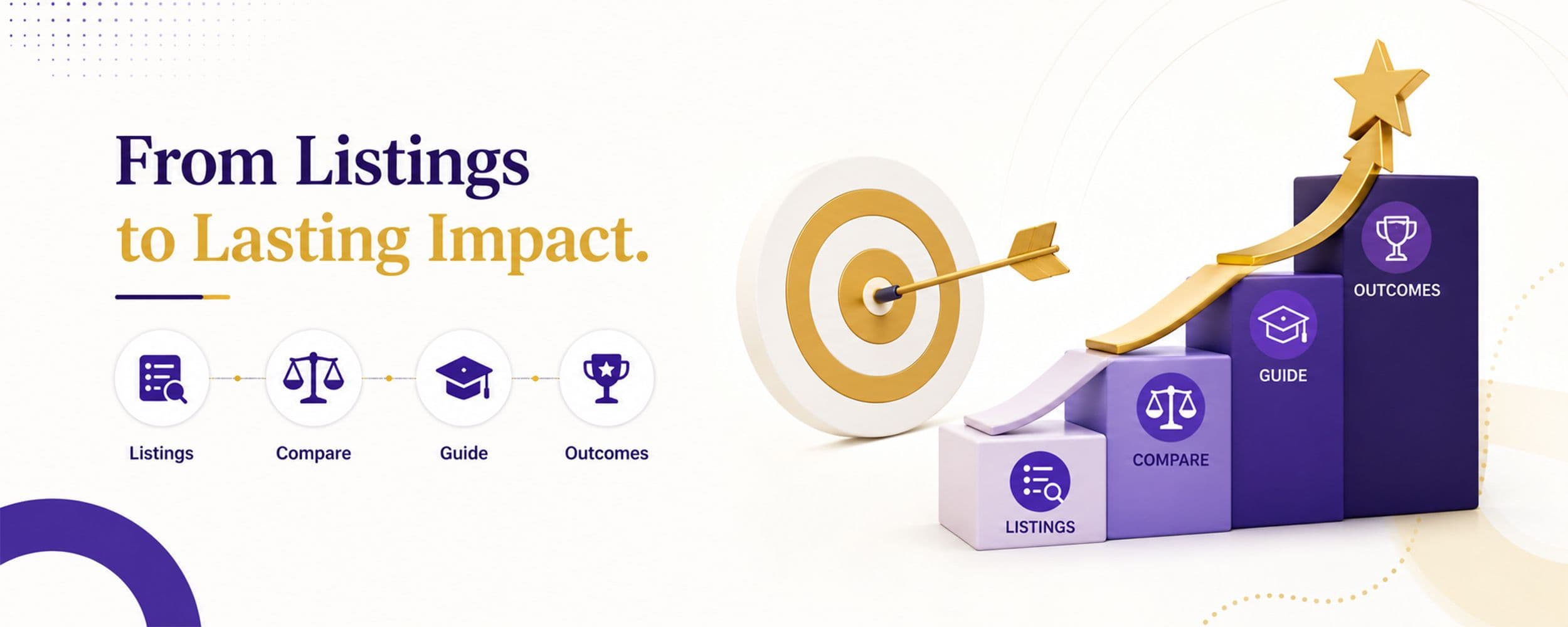
Most Indian education platforms are built as directories and plateau as directories: real traffic, thin revenue, and a business model that amounts to selling the same enquiry to several institutions. The way out is a value ladder with four rungs: listings that inform, comparison that genuinely decides, guidance that students trust, and outcomes the platform can stand behind. Each rung upgrades the monetisation the previous one could not support. The platforms that climb share three disciplines: they treat trust as the product, they keep supply and demand honest with each other, and they make roadmap decisions by strategy rather than by their loudest paying institution.
There is a standard biography for Indian edtech marketplaces, and its first chapters are genuinely impressive. A founder spots the chaos of education discovery, builds a clean directory of institutions and programmes, wins search traffic because the content answers real questions, and starts selling leads to institutions. Traffic grows. Revenue appears.
Then the story stalls. Traffic keeps growing, but revenue per visitor stays flat, institutions grumble about lead quality, students treat the platform as one tab among five, and the roadmap fills with feature requests from whichever institution pays most. The platform has plateaued as a directory, and directories, however large, are commodity businesses: their product is an unqualified phone number, and unqualified phone numbers race to the bottom on price.
First, understand what a listings business actually sells
The directory model has an honest description that founders rarely say aloud: it sells the same student enquiry to multiple institutions, each of which knows it is one of several buyers. Everything wrong with the plateau follows from that sentence.
Lead prices stay low because the product is non-exclusive and unverified. Institutions churn because conversion from these leads is poor. Students learn the platform's incentives, notice every institution is top ranked, and withhold trust accordingly. And because no participant deeply trusts the platform, no participant will pay it a premium.
Rung one: listings that actually inform
The foundation rung is where most platforms already are, but few have finished it properly, and the unfinished parts cap everything above.
Finished means: coverage that is genuinely comprehensive in the chosen segments, data that is verified and dated rather than scraped and stale, fees stated honestly, and structure that machines can read. In 2026 a large share of education discovery flows through search and AI answer engines. Marking programmes, fees, and institutions up with structured data vocabulary and verifying the platform so AI assistants can cite it correctly is not technical housekeeping. For a content platform, citation in AI answers is the new distribution.
The test for rung one: would a student researching seriously choose your page over the institution's own? If not, finish this rung before dreaming about the others.
Rung two: comparison that genuinely decides
The second rung is where a directory becomes a tool. Students do not want fifty options; they want the confidence to eliminate forty-seven, and a platform that helps them do it honestly becomes part of the decision rather than a stop on the way to one.
Genuine comparison means structured, like-for-like data across programmes, fees with total-cost honesty, eligibility clarity, outcomes where they can be verified, and the willingness to show unflattering truths about paying institutions. This is the rung where most platforms flinch, because honest comparison creates friction with the customers who write the cheques. But it is also where the economics turn: a platform trusted to compare produces enquiries with declared intent and context, and a contextual, qualified enquiry is a different product from a phone number.
Rung three: guidance students trust
The third rung transforms the business, because it changes who the customer is. Listings and comparisons serve the student to sell to the institution. Guidance serves the student, and gets paid by whoever values the student's confidence, sometimes the student themselves.
Guidance means the platform behaves like a counsellor at platform scale: helping a specific student, with their qualifications, budget, and goals, arrive at a shortlist that is defensibly right for them. Historically this rung was throttled by economics, because human counselling does not scale. That has changed: intelligent systems can now conduct the sorting and matching conversation at platform scale, with human counsellors concentrated on the decisions that need them.
An honest warning that belongs on this rung: guidance monetised by institutions creates the conflict every student eventually notices. The platforms that survive the rung publish how they earn, keep paid placement visibly separate from advice, and accept the short-term revenue cost of that separation. Trust is the product here; everything else is packaging.
Rung four: outcomes you can stand behind
The final rung is where few Indian platforms have arrived, and where the category's real prize sits: the platform that can demonstrate, with data, that students who came through it made better decisions, enrolled in programmes that fit, completed them, and reached the outcomes they were promised.
Standing behind outcomes means closing the loop, enrolment and outcome data flowing back against the guidance that produced it, at platform scale, and being willing to publish the results honestly. It is expensive, slow, and organisationally demanding, and it is also the only rung competitors cannot copy in a quarter.
The three disciplines that decide who climbs
Treat trust as the product with a budget. Every rung above the first is built from trust: verification, honest comparison, disclosed sponsorship, separated advice. Platforms that treat these as costs to minimise stay on rung one forever.
Keep supply and demand honest with each other. The directory plateau is fed by a quiet dishonesty in both directions: institutions oversold on lead volume, students oversold on institutional quality. Each rung of the ladder is, at bottom, a mechanism for making the two sides more honest with each other.
Guard the roadmap from the loudest institution. The biggest-paying institutions have an interest in keeping the platform on rung one, where their spend buys prominence rather than scrutiny. A roadmap assembled from their requests will faithfully build the directory forever. Climbing requires prioritisation by strategy, periodically audited by someone with no stake in any requester.
The Indian education market is enormous, chaotic, and emotionally consequential, which is why students and families will reward, disproportionately, the platform that finally behaves like it is on their side. The directory era proved the demand. The ladder is how a platform stops selling phone numbers and starts owning the decision.